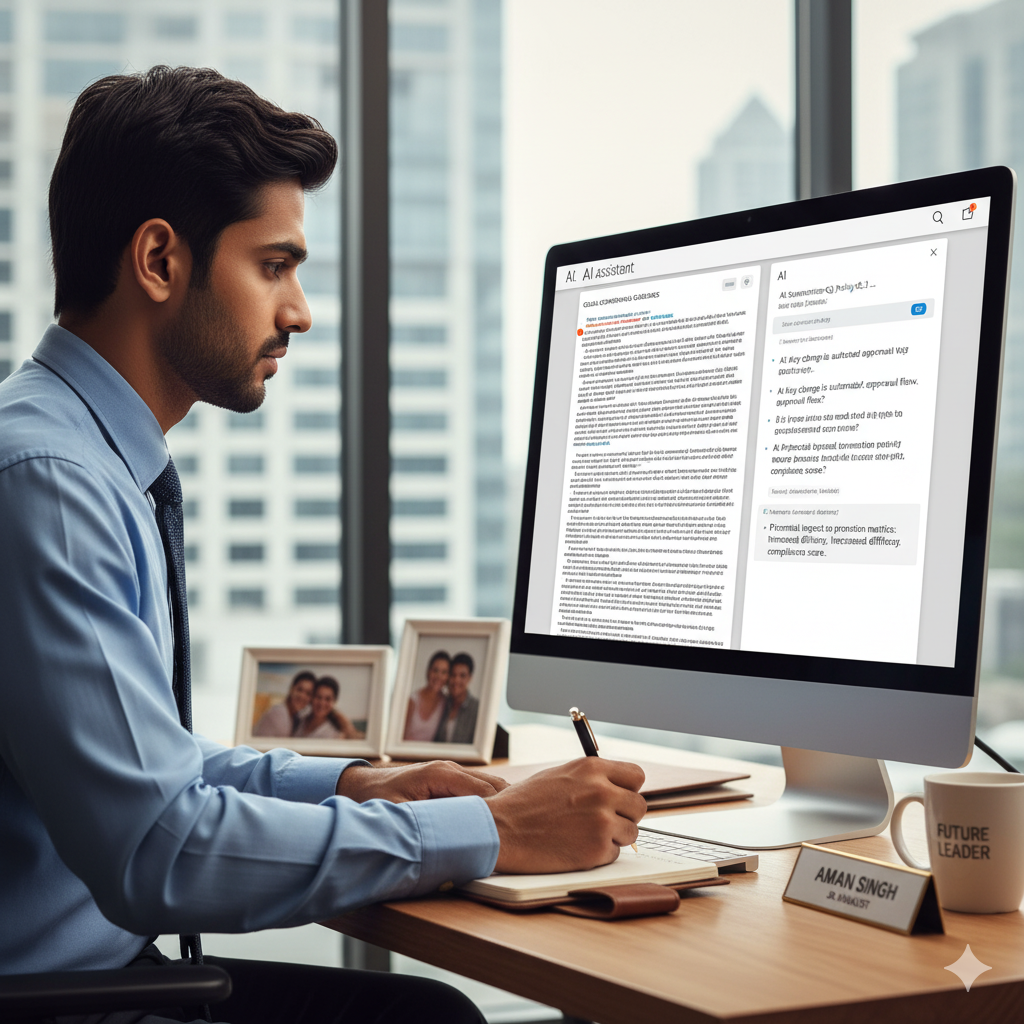

Talk to Your Retirement Files: How Private GPT Projects Make It Simple
Most people have a binder (or a half-broken PDF link) full of retirement rules, regulations, and benefit formulas they swear they’ll get around to reading one day. The problem? These documents are dense, complicated, and written in a language that feels more like legal fine print than real-life guidance.
But imagine this: instead of hunting through hundreds of pages, you could just upload all those retirement files into a private GPT project and talk to them.
No more scrolling. No more CTRL+F guessing. Just plain-English questions and instant, tailored answers.
The better the data that you feed it, the better the answers will be. In addition to retirement files consider a redacted paystub, the organization’s pay and promotion plans and even a mortgage statement.
How It Works: From Pay Stubs to Projections
Using a custom AI assistant (like Lucy), all you have to do is upload a few key documents:
-
Your rank and pay step
-
A recent pay stub (redacted)
-
Your department’s pay scale chart
-
Leave balances (sick, vacation, comp)
-
Retirement system info (like VRS, CalPERS, DROP, etc.)
From there, the AI can run the numbers faster than your lieutenant can say “don’t forget your turnout gear.”
Example Prompts First Responders Are Using
Once your info is loaded, try asking AI things like:
Pay:
-
“Based on my current rank and step, and assuming 3% annual raises, what will my pay be in 5 years?”
-
“If I get promoted to Captain in 2 years, what’s the total career difference in earnings?”
Retirement:
-
“If I retire in July 2037, how much will my pension be based on my current formula?”
-
“If I enter DROP in 2029, how much will I accumulate by 2034?”
Leave:
-
“I want to retire with 500 hours of sick leave. If I burn 40 hours per year, when will I reach that?”
-
“How much leave will I lose under my department’s sellback and cap policies?”
These aren’t guesses. These are AI-generated projections based on your real career data and department-specific policies.
Why It Matters
AI can now replace spreadsheets, guessing games, and group text threads where no one really knows the answer.
✅ You’ll plan smarter
✅ You’ll catch benefits you might miss
✅ You’ll make promotion and retirement decisions with confidence
Pro Tips to Get the Most Out of AI
-
Be specific: Give the AI details like your step, rank, or exact retirement goal.
-
Ask follow-ups: Try “Compare both options” or “Explain this like I’m a 5th grader.”
-
Use real numbers: Upload redacted paystubs, PDFs of pay tables, or leave policy docs.
The more data you feed it, the sharper the answer.
What You Could Ask (and Actually Get Clear Answers On)
Here are a few examples of the types of things you could pull out of your retirement regulations and benefit rules when they’re loaded into a private GPT:
-
Service Time & Eligibility
-
“What’s the earliest date I can retire with full benefits?”
-
“If I leave at 20 years instead of 25, how much does my pension drop?”
-
-
Pay & Benefit Calculations
-
“How is my retirement multiplier applied to my base salary?”
-
“Does holiday pay and overtime count toward my average final compensation?”
-
-
Logistics & Rules
-
“What’s the process if I want to purchase prior service credit?”
-
“How does the Deferred Compensation Plan differ from the pension?”
-
-
Special Scenarios
-
“What happens if I get promoted in year 15?”
-
“Can I combine my years of service from another agency with this system?”
-
Instead of flipping through PDFs, you’re just having a conversation.
The Real Power: Talking, Not Typing
This is where it gets fun. With tools like ChatGPT voice or other integrations, you don’t even need to type your questions.
You can literally:
-
Upload your retirement files into a secure project.
-
Open your phone or laptop and say, “How many years until I hit the 50/25 rule?”
-
Get a spoken answer back in plain English.
It’s like having a benefits officer on call 24/7—except this one never gets tired or passes you off to another department.
Final Thought
Retirement shouldn’t feel like decoding hieroglyphics. By uploading your retirement rules and logistics into a private GPT project, you put clarity in your own hands.
It’s not about replacing your HR or benefits team—it’s about finally being able to understand your future without the headache.