
Building a Smarter Way to Staff the Shift
The Challenge
Every shift day starts with the same mission: ensuring every engine, truck, and unit is fully covered, every position is filled, and every station is ready to respond.
Behind the scenes, staffing officers manage an incredible balancing act — navigating rosters, callback lists, mandatory holdover rotations, fatigue rules, and specialized qualifications — all before most people have had their morning coffee.
The process worked, but it was manual, time-consuming, and occasionally inconsistent.
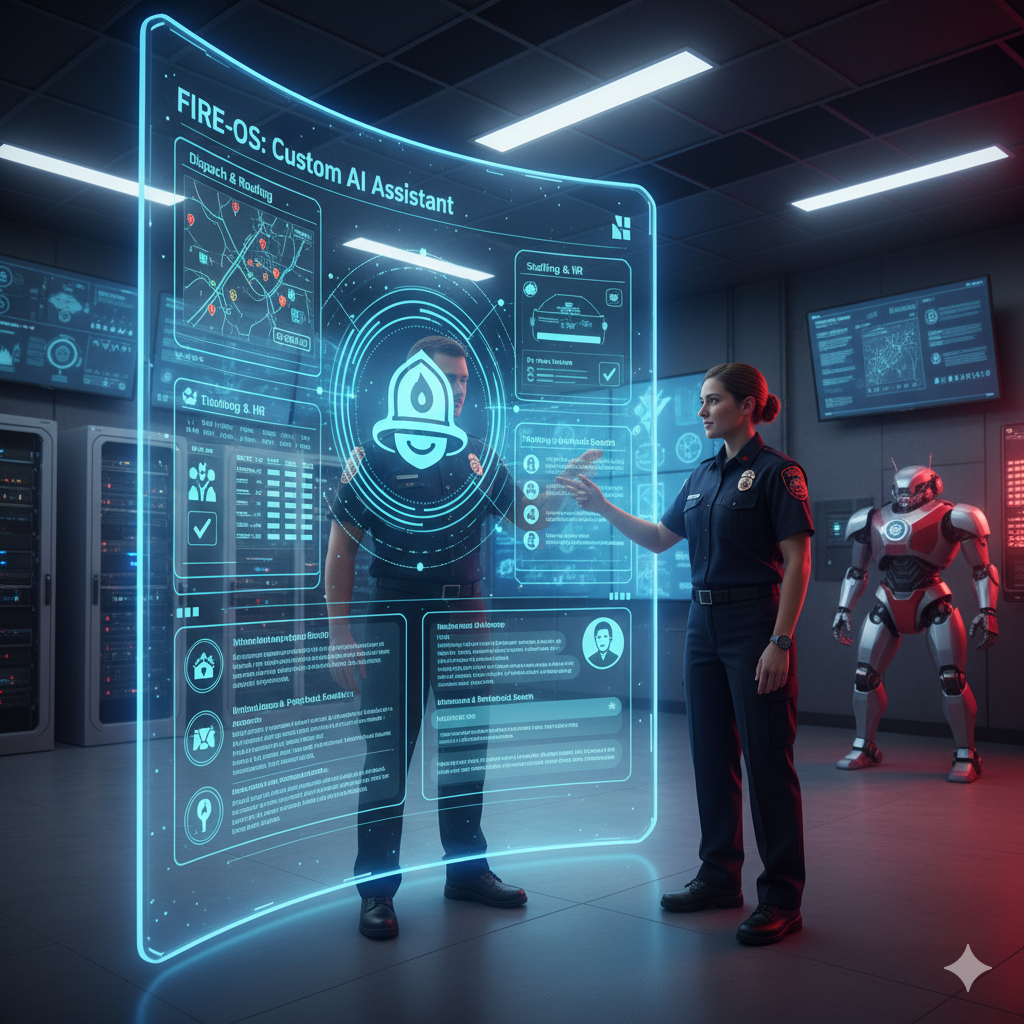
As the department prepares for a new shift structure next year, the team saw an opportunity to pilot a smarter, faster way to do daily staffing — one that applies existing policies automatically and builds a complete staffing plan in seconds.
The Idea
The goal was simple: build a digital staffing assistant that could read the same files staffing officers already use, understand the rules they follow, and generate a ready-to-review staffing plan that meets every policy requirement.
Using a customized AI model trained specifically on our staffing policies, procedures, and fatigue management rules, we set out to teach it to:
-
Read the daily roster report
-
Identify all vacancies (marked as “?,?”)
-
Match qualified personnel from the callback and mandatory holdover (MHO) lists
-
Follow every step of departmental policy automatically
-
Produce a staffing table with clear justifications and compliance notes
⚙️ The Hurdles We Overcame
This project was a true collaboration between staffing officers, policy experts, and data analysts. Each step surfaced new real-world challenges — and solutions that improved the process far beyond what we expected.
1️⃣ Getting the Data Right
The first challenge: file formats. Excel exports from Telestaff sometimes dropped cell formatting, making vacancies hard to detect.
✅ Solution: Switch to using PDF versions of the roster, since AI can reliably read text indicators like ?,? and time blocks directly.
2️⃣ Policy Precision
Staffing isn’t just about filling gaps — it’s about staying compliant with policies that govern callbacks, fatigue, and qualification coverage.
✅ Solution: Each rule from the staffing orders and SOPs was embedded directly into the model’s logic. Every decision it makes cites the corresponding section automatically.
3️⃣ Dynamic List Detection
Callback and MHO lists change length daily. Early versions of the model assumed fixed row numbers and misread the data when the lists shifted.
✅ Solution: The system now auto-detects where each section begins and ends, adapting automatically no matter how long the lists are.
4️⃣ Handling 24-Hour Vacancies Correctly
Initially, full-day (08:00–08:00) vacancies were being split automatically into two 12-hour halves. That didn’t reflect how staffing is actually done.
✅ Solution: Add the “24-hour callback-first” rule.
Now, the system looks for a single 24-hour callback first — and only splits the shift if no full-availability callback exists.
5️⃣ Fatigue and Qualification Checks
Every recommendation now automatically checks for:
-
Fatigue rule compliance (no one works more than 48 in 72 hours without rest)
-
Required certifications (DPO, RSQ, HazMat, Tech Rescue, Marine, etc.)
6️⃣ Human-in-the-Loop Flexibility
The goal was never to remove human judgment. Staffing officers can still override assignments for battalion balance, experience, or specialty coverage — the system simply logs those decisions with a clear note like:
“Assignment made per officer preference; policy criteria met.”
The Breakthrough
After multiple rounds of testing, refinement, and verification, the first fully automated, policy-compliant staffing run was completed in October 2025.
The system:
-
Read the roster directly from the PDF
-
Detected every vacancy automatically
-
Pulled available members from the callback list
-
Checked fatigue, rank, and qualifications
-
Avoided mandatory holdover entirely
Result:
✅ All vacancies filled
✅ 100% compliance with staffing policies
✅ 0 fatigue conflicts
✅ 0 forced holdovers
✅ Completed in under 30 seconds
What It Means Going Forward
This project proved that automation and policy compliance can coexist. The staffing process is faster, more transparent, and less stressful for the officers managing it every day.
With this digital staffing assistant, a staffing officer can now:
-
Export the daily roster as a PDF
-
Upload the combined callback and MHO file
-
Receive a complete, fully justified staffing plan — instantly
The system doesn’t replace staffing officers; it empowers them to focus on judgment calls, fairness, and readiness instead of manual data entry.
What’s Next
The next step is expanding testing to additional shift schedules and refining specialty team coverage (Rescue, HazMat, Marine). Long-term goals include integration with Telestaff and automated fatigue tracking.
This project demonstrates what happens when operational experience meets digital innovation — a collaboration that saves time, ensures compliance, and strengthens readiness.
In Summary
This wasn’t just about using AI.
It was about taking a process that’s been done by hand for decades and asking, “What if we could make it faster, fairer, and fully policy-compliant — every single time?”
We did exactly that.
And this is just the beginning.