
Protected: VBFD Promotional Test Prep
There is no excerpt because this is a protected post.

There is no excerpt because this is a protected post.

How We Got Here: A Decade of Mission Creep Lift assists weren’t always the Fire Department’s problem. Historically, the Department of Emergency Medical Services handled these calls. The logic was simple: if someone’s down, it could be medical. But as EMS faced mounting call volumes and resource constraints, they began requesting Fire Department backup—first
So, you’re on the phone with a new dentist’s office, scheduling your first appointment. “We’ll need your dental records transferred,” the receptionist chirps. You grab a pen, ready to jot down the email address. The receptionist begins, “Please send them to drsmithdentalcare@gmail.com.” The alarm bells start ringing. A tiny red flag appears. It’s the digital

Let’s be honest. When most people hear ‘AI,’ they instantly picture their data, maybe a sensitive email or a confidential report, being sucked into the digital nether, where a robot uses it to get smarter. It’s a completely valid fear, and for many free, consumer tools, that’s exactly what’s happening. They’re using your inputs to

Most people think ‘AI Compliance’ is just a headache for government bureaucrats. They’re wrong. In the era of data leaks, building without a safety net is a gamble no business can afford, no matter its size; from the local handyman to the Department of Energy. This guide creates a clear path through the noise, detailing

In the public sector, the conversation around Artificial Intelligence is no longer about if it will be adopted, but about how fast it must be adopted to survive. That’s the reality facing every government agency today. The pressure to process massive amounts of data and deliver faster, more equitable services is reaching a breaking point.
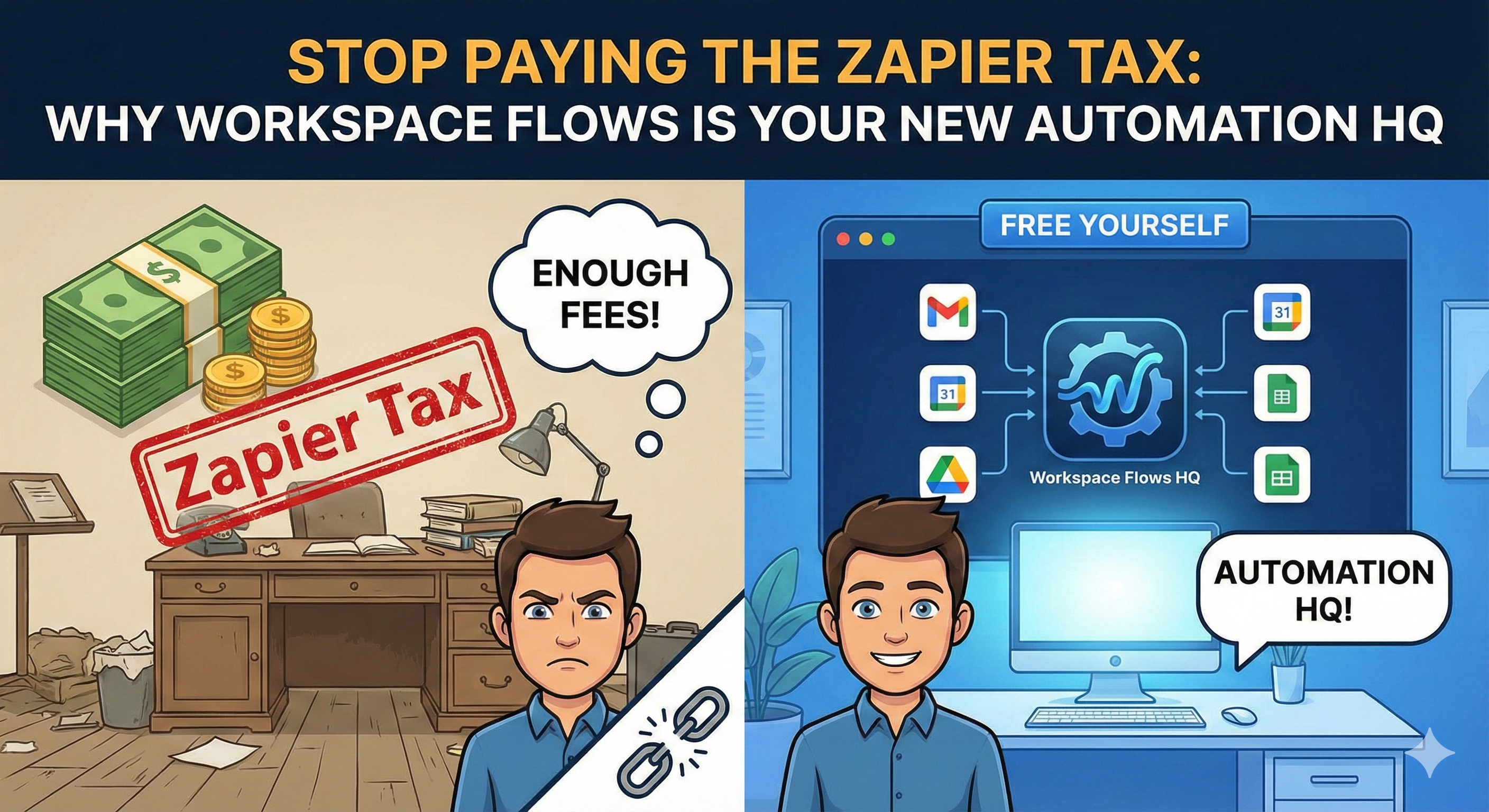
Stop Paying the Zapier Tax: Why Workspace Flows is Your New Automation HQ If you’re still shelling out cash for Zapier or some other automation subscription, you might wanna sit down. I’ve found a new obsession that’s going to save you dough and a boatload of headaches: Google Workspace Flows. This is yet another reason—maybe